April 22, 2026
Basic Perfume Guide: How to Choose Your Cologne Without Overcomplicating It
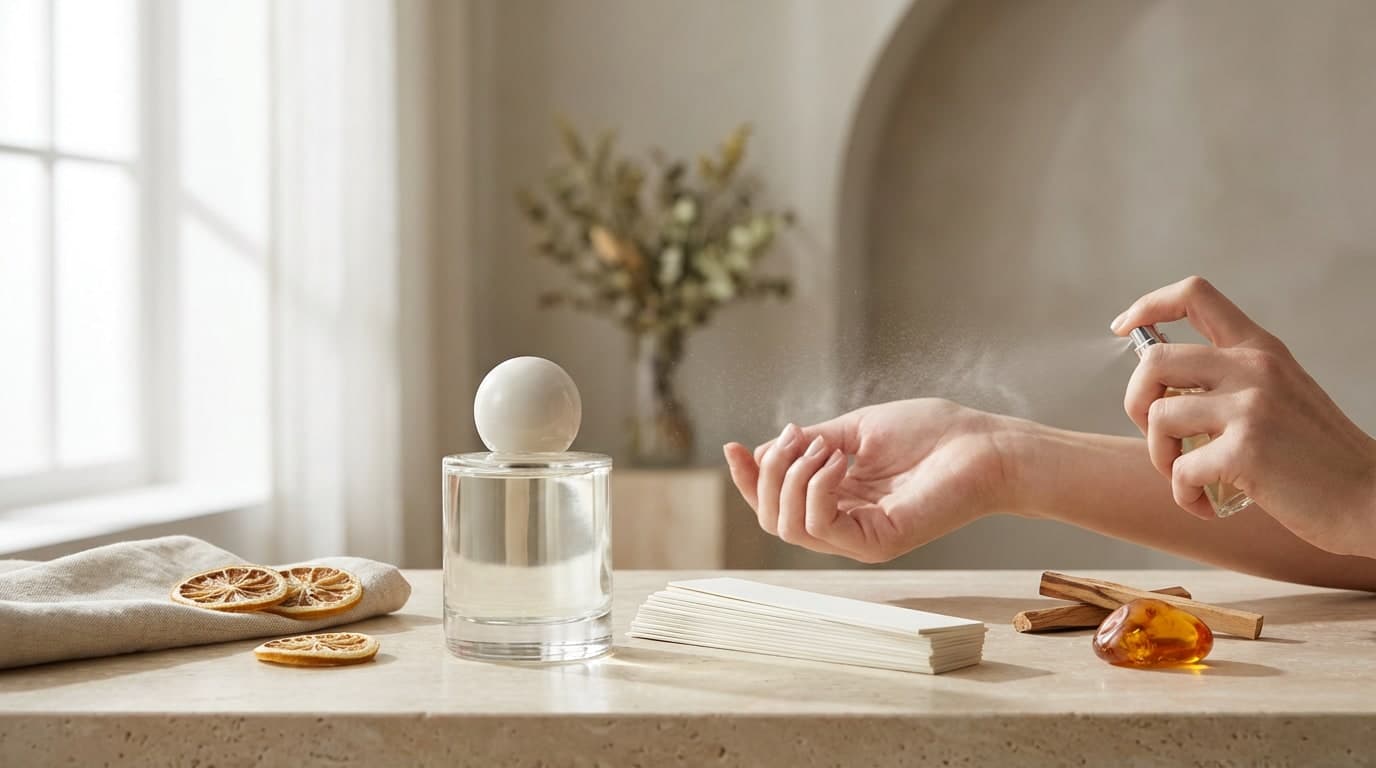
Start with what matters: a perfume has to smell good to you and make you feel comfortable wearing it. With that idea clear, choosing a cologne becomes much easier. There’s no need to get lost in weird terms or have a huge collection to get it right.
What EDT, EDP, and parfum mean
When you look at perfumes, you’ll see abbreviations like EDT, EDP, and parfum. Basically, they refer to the concentration of the fragrance.
The higher the concentration a perfume has, the longer it usually lasts on skin. It’s not a perfect rule, but it is a good reference for understanding why some perfumes feel lighter and others last longer.
The three concepts that are most worth understanding
If you’re getting into the world of fragrances, there are three words that will help you a lot:
- Longevity: how long the perfume lasts.
- Projection: how far it can be smelled.
- Notes: how the scent evolves over the hours.
The top, heart, and base notes make a perfume smell different at the beginning than at the end. Sometimes the change is very clear; other times, the perfume stays fairly linear.
How to build a simple collection
Not everyone needs ten or fifteen perfumes. In fact, with very few you can cover almost the whole year if you choose well.
If you want to have 5 perfumes
A small but complete collection could include:
- A perfume for everyday wear: fresh, clean, and easy to wear.
- One for the office or work: pleasant, not aggressive, and discreet.
- One for night: warmer, more intimate, and with more presence.
- One for going out, parties, or the club: more fun, with a fruity touch or something more attention-grabbing.
- One for formal occasions: elegant, polished, and with a sophisticated edge.
If you prefer to stick with 3
Then the most practical thing is to think in terms of:
- a signature perfume for everyday wear,
- one for spring and summer,
- one for autumn and winter.
The idea is to simplify without losing real variety for the weather and different occasions.
If you only want 1 perfume
Here, the key is to choose something versatile, something that works in many situations and that you really like on skin. It’s not worth buying based only on popularity. The best thing is to find a scent that suits you and that you won’t get tired of wearing.
Tips for testing perfumes before buying
Before you jump in, it’s worth trying them.
Ideally, smell samples or test them in store before deciding. And if you can, try them on skin, not just on paper, because your skin chemistry changes the result quite a bit.
It’s also better to apply perfume on the skin rather than on clothing, since on skin the scent usually develops better and lasts more naturally.
How to apply it without overdoing it
A few well-placed sprays are usually enough. A fairly balanced application could be:
- behind both ears,
- on the nape of the neck,
- on the wrists,
- and, if you want more presence, one spray on the chest.
The idea is not to overdo it, especially in enclosed spaces. If a perfume projects weakly or doesn’t last long, you can always adjust the number of sprays or carry a travel bottle to reapply during the day.
A very personal taste: sweet, fresh, and easy-to-wear perfumes
When choosing, personal taste also matters a lot. Some people prefer more woody or mossy scents, while others feel more comfortable with sweet, fruity, or clean fragrances.
In a collection aimed more at that kind of profile, you’ll often see perfumes for formal events, fresh options for the gym, or fragrances that simply smell good on skin and don’t try to impress too much. There are also more intense perfumes for the night, others that are more summery with coconut or fruit, and softer options for everyday wear.
The important thing is to understand what role each one plays. You don’t need a perfume for every social label if you don’t want one; it’s enough to cover your real moments of use.
The final idea: less fear and more judgment
Choosing perfumes shouldn’t be scary or turn into a random purchase. If you understand the basics — concentration, longevity, projection, intended use, and how it reacts on your skin — you’ve already made half the decision.
And in the end, what matters most is still the same: that you like how you smell and that you feel good wearing it. With that, you usually get it right.